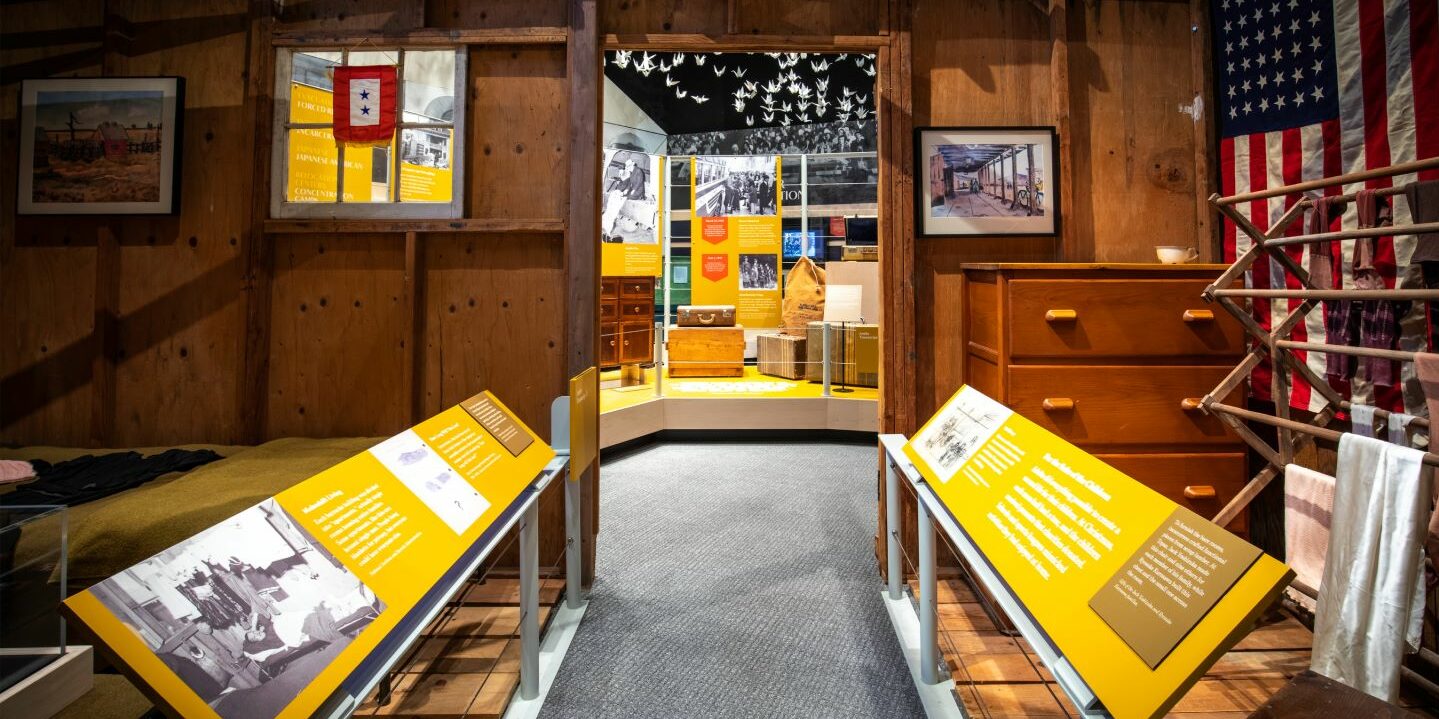

The Museum's longest running exhibit, "Uprooted!" surveys a century of Japanese American history in California and features the personal stories of formerly interned Californians.
Although Japanese immigrants and their American-born children established businesses, built thriving communities and contributed to the states’s prosperity, they began to face hostility and discrimination following the bombing of Pearl Harbor on December 7, 1941.
The tension came to head when President Franklin D. Roosevelt authorized the internment of Japanese American citizens by signing Executive Order 9066 on February 19, 1942. Under the order, local military commanders were able to designate "military areas" as "exclusion zones," from which "any or all persons may be excluded," which cleared the way for the relocation of Japanese Americans to internment camps. By the spring of 1942, Japanese Americans were forced to relocate to "Assembly Centers" and were eventually moved to "War Relocation Centers" across the West like Manzanar and Tule Lake in California.
Following the history of the Japanese Americans in California, visitors experience life behind barbed wire in recreated barracks, which displays photographs and artifacts from he Japanese American Archival Collection at California State University, Sacramento. Continuing through the 1980s, the exhibit also chronicles how former internees overcame the hardships of the internment and worked to establish their lives, their communities and redress for their losses after the war.
Each winter, the Museum offers an education program about the internment, led by people who experienced it personally. For more information, please visit the "Time of Remembrance" page.